


We’ve all heard of THC and CBD, but did you know that there are hundreds, if not thousands, of other beneficial cannabinoids? Here’s everything you need to know about them.
What’s the secret? It could be minor cannabinoids. Here’s what you need to know about these unsung heroes of the cannabis plant, and how keeping an eye on minor cannabinoids can help shape your consumption experience.
- What are minor cannabinoids?
- What are the most common minor cannabinoids?
- How do minor cannabinoids interact with the human body?
- How do minor cannabinoids differ from major cannabinoids?
- How do minor cannabinoids interact with the endocannabinoid system?
- How can minor cannabinoids be extracted and used in products?
- HCH favorites featuring minor cannabinoids
What are minor cannabinoids and why are they important in cannabis?
These so-called “minor cannabinoids” work hand in hand with THC and CBD. When they interact with cannabinoid receptors throughout the body, your experience intensifies, creating what’s known as the entourage effect.
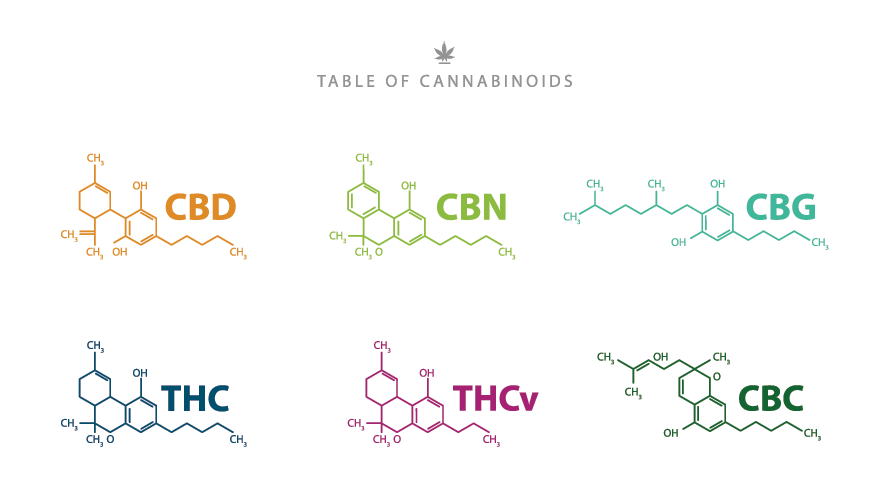
What are the most common minor cannabinoids found in cannabis?
It seems like a big number! But don’t worry. We’ve narrowed it down for you. Here are the most important minor cannabinoids you need to know:
CBG
CBN
CBC (H3)
CBE
CBV
THCV
CBGA
THCA
CBNA
How do minor cannabinoids interact with the human body?
One minor cannabinoid might bind to CB1 receptors, whereas another might bypass these receptors to create a more subtle effect, like stimulating your body’s ability to fight pain or inflammation.
How do minor cannabinoids differ from major cannabinoids such as THC and CBD?
This delivers desirable experiences for consumers and even possesses potential medical applications. The cannabis industry and cannabis researchers are both studying minor cannabinoids for their therapeutic and recreational uses.
However, unlike THC and CBD, most minor cannabinoids can’t be consumed in an isolated form. Instead, they typically add complexity to the cannabis experience, enhancing and deepening the effects of any given strain.
How do minor cannabinoids interact with the endocannabinoid system?
Some behave like THC and bind directly to receptors, influencing their behavior to produce psychoactive effects like an enlivened mental state, sociability, and another hallmark of a classic high.
Others behave more like CBD, interacting with the ECS by inhibiting endocannabinoid signaling. How this process works all depends on your dosage—the more you take, the stronger the effects.
How can minor cannabinoids be extracted and used in products?
If a company knows the unique generic signature of the minor cannabinoid it wants, they can use conventional extraction methods to isolate the targeted compounds, which can be further purified and distilled to create usable consumer products.
If a cannabinoid shows up in smaller percentages and is difficult to isolate, companies may use biosynthetic processes to create it in larger quantities. These methods take an organic material like yeast, bacteria, or a hemp plant and convert it into the desired minor cannabinoid, which can then be purified and used commercially.
HCH favorites featuring minor cannabinoids
Here are some of our favorite minor cannabinoid packed products to launch your journey into this brave new world:
Ready to place an online order with High Country Healing Vail? Click here.